
Advantages and Benefits of Dental Crowns
Dental crowns provide numerous benefits, making them a preferred option for restoring damaged or weakened teeth:
- Durability: Constructed from robust materials such as porcelain, ceramic, or metal, dental crowns are built to last for many years with proper care.
- Aesthetic Enhancement: Custom-made to match the color and shape of your natural teeth, crowns significantly improve the appearance of your smile.
- Protection: Crowns act as a protective barrier for weakened teeth, preventing further damage or decay.
- Improved Functionality: By restoring the shape and size of a damaged tooth, crowns enhance your ability to chew and speak effectively.
- Comfort: A well-fitted crown feels just like a natural tooth, offering comfort and ease of use.
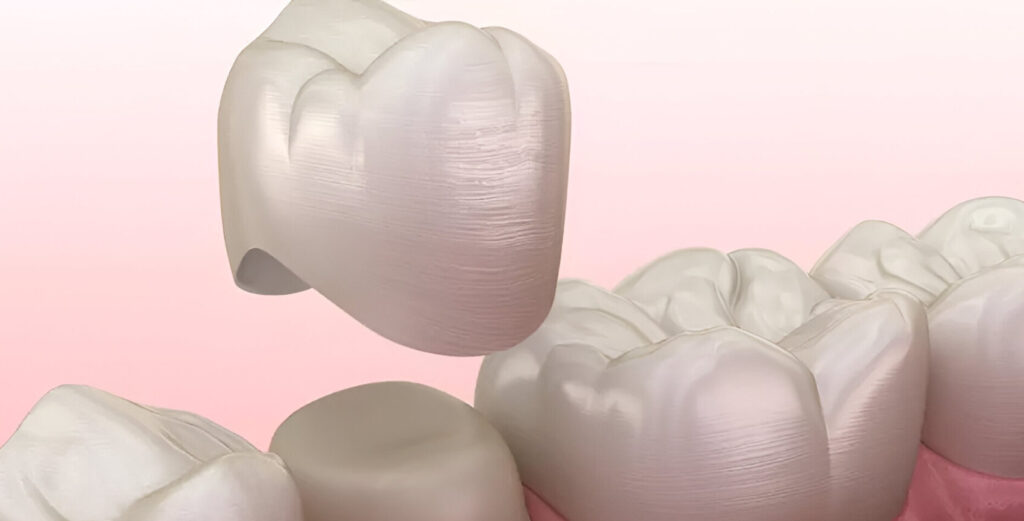
Procedure for Getting a Dental Crown
- Initial Consultation: The dentist examines your tooth and takes X-rays to determine if a crown is necessary.
- Tooth Preparation: The dentist numbs the tooth and surrounding area, then reshapes the tooth to make room for the crown.
- Impressions: An impression of the reshaped tooth and surrounding teeth is taken to create a custom crown.
- Temporary Crown: A temporary crown is placed to protect the prepared tooth while the permanent crown is being made.
- Permanent Crown Placement: Once the permanent crown is ready, the dentist removes the temporary crown and cements the new one in place, ensuring a proper fit and bite.
Types of Dental Crowns
- Porcelain Crowns: Known for their natural appearance, these crowns are often used for front teeth.
- Ceramic Crowns: Offering a natural look, ceramic crowns are ideal for patients with metal allergies.
- Metal Crowns: Made from gold, platinum, or base metal alloys, these crowns are extremely durable and typically used for molars.
- Porcelain-Fused-to-Metal (PFM) Crowns: These crowns combine the strength of metal with the aesthetics of porcelain, providing durability and a natural appearance.
Recovery Time
Recovery after getting a dental crown is usually quick. Most patients can resume normal activities immediately. You may experience some sensitivity or discomfort for a few days, which can be managed with over-the-counter pain relievers. Following your dentist’s care instructions and maintaining good oral hygiene are crucial for the longevity of your crown.
Dietary Recommendations
After receiving a dental crown, most foods are generally safe to eat. However, to protect your new crown, especially in the first few days, consider these dietary tips:
- Avoid Sticky Foods: Caramel, gum, and similar foods can pull at the crown and cause it to loosen.
- Avoid Hard Foods: Nuts, ice, and hard candies can crack or damage the crown.
- Avoid Chewing on the Affected Side: If possible, chew on the opposite side to prevent putting excessive pressure on the new crown.
- Choose Soft Foods: Yogurt, mashed potatoes, and smoothies are gentle on your teeth and helpful during the initial recovery period.
By adhering to these guidelines and attending regular dental check-ups, you can keep your dental crown in excellent condition, ensuring it continues to protect your tooth for many years.